Lost Dog in Whistler: What to Do First (Or If Yours Slips the Leash)
It happens more often than people think. A door held open a beat too long at a Creekside rental. A spooked rescue on the Valley Trail. A gate the wind nudged at a Function Junction patio. One minute the dog is at your heel — the next, a brown blur into the cedars.
Our team is out on Whistler trails every single day, and we have helped reunite a lot of dogs with their people. What follows is the protocol we actually use for two situations: you have spotted a loose dog, or your own pup has just bolted.
If You Have Found a Loose Dog: Do Not Chase
This is the most important sentence in the post. Chasing a frightened dog pushes them into survival mode — in that state, dogs can stop recognizing even their own owners (AKC, Pet Professional Guild, Dogsafe, BC SPCA).
What works instead:
- Stop where you are. Crouch, sit, or even lie down sideways. Curl small.
- No direct eye contact. Eye contact reads as a threat. Look past the dog or down at the ground.
- No shouting. Soft, low, sing-song voice only. Yelling — even excited yelling — deepens the flight response.
- Run the opposite direction. Counterintuitive, and it works. Many loose dogs will give chase.
- Open a car door if you are near a vehicle. “Want to go for a ride?” gets a surprising number of dogs to load themselves.
If the dog approaches — let them come the rest of the way. Do not reach. Do not grab the collar. Toss a high-value treat (cheese, jerky, anything smelly) a foot away, then closer, then at your feet.
Approaching the Dog
The classic “hand out to sniff” move is one of the biggest misconceptions in dog handling. Many dogs find a hand extended toward their face threatening.
Instead:
- Turn your body sideways, not square to the dog.
- Let the dog initiate contact.
- If you pet, go for the chest, the side of the neck, or under the chin — never the top of the head.
- A wagging tail is not a green light. Read the whole body — stance, ears, eye whites, mouth tension.
Securing the Dog Safely
If you do not have a leash on you, improvise:
- A belt looped through the collar.
- A long sleeve tied through the collar ring.
- A scarf or shoelace threaded as a figure-eight.
Avoid grabbing the collar with your full hand — startled dogs can spin and bite, even friendly ones. Once secured, keep the found dog separated from your own pets at home. Vaccine and parasite status is unknown.
Who to Call in Whistler
Whistler protocol is a little different from the rest of BC. Whistler Animals Galore (WAG) does not field-respond — they coordinate with guardians and intake from impound. The actual pick-up arm is Whistler Bylaw.
Save these numbers before you ever need them:
- WAG: 604-935-8364 (email is faster — staff are usually with the animals)
- Whistler Bylaw Services: 604-935-8280
- BC SPCA Animal Helpline: 1-855-622-7722
- Coast Mountain Veterinary Services (Whistler) for a free microchip scan
Any vet clinic, animal control office, or BC SPCA branch will scan for a microchip at no charge. That single scan is often the difference between a same-day reunion and a week of flyers.
Post the find on:
- BC SPCA Pet Search
- Missing Pets in BC (Facebook)
- The Whistler Community Facebook group
- WAG’s lost-and-found
Embed the photo and your contact info inside the image itself — text gets stripped when posts are shared.
If Your Own Dog Just Got Loose
The first hour is everything. Drawing from Dogsafe’s Operation Find Fido and BC SPCA’s protocol:
- Stay at — or return to — the last-seen location. Lost dogs often loop back within hours. If you must leave, drop a worn t-shirt and a bowl of water (not food — food attracts wildlife in Whistler’s backcountry).
- Search early morning and dusk. Peak loose-dog activity. Drive slowly with the window down, calling gently — not frantically.
- Call gently, early. Then go silent. Calling your dog by name in the first few minutes can pull them back. But once a dog is in panic-flight mode, calling can keep them running. Switch to scent-station tactics instead.
- Walk the neighbourhood multiple times daily. Sightings are evidence — log each one with time and location. A map of three sightings tells you the dog’s loop.
- Visit every shelter and vet within a 30 km radius in person every 24 hours. Do not phone. Staff change shifts; stray dogs come and go in hours. Cover Squamish through Pemberton.
- Update the BC Pet Registry (microchip, tattoo, or license) the same day. If your dog is not on it yet, register now — before you ever need to.
The First-Hour Rule
Most lost dogs in Whistler are recovered within 24 hours when the response is fast and calm. Panic searching, calling loudly, and chasing all extend the recovery window. Slow down. Stay close to the last-seen spot. Work the protocol.
What We Carry at Doggy Tales
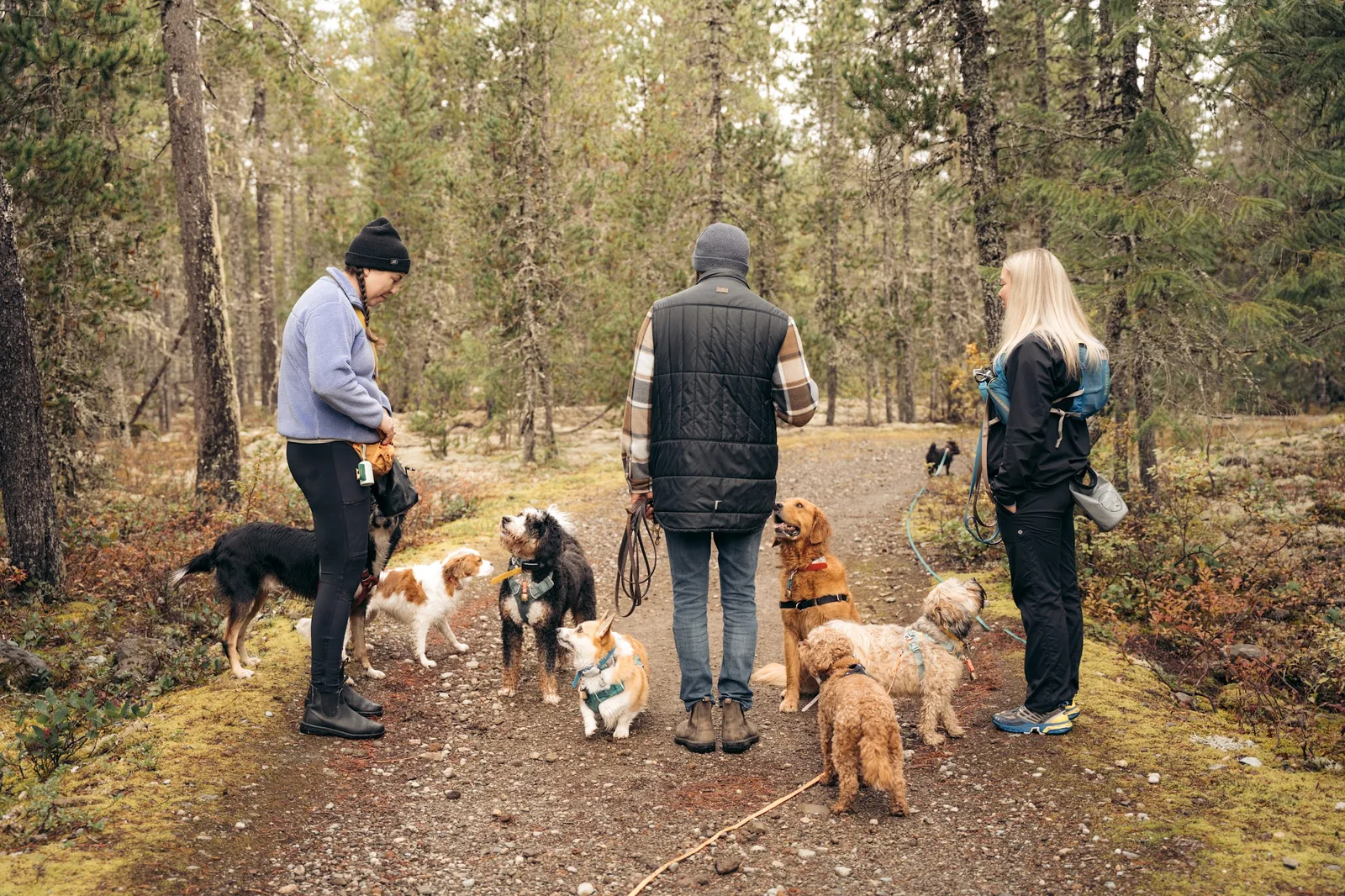
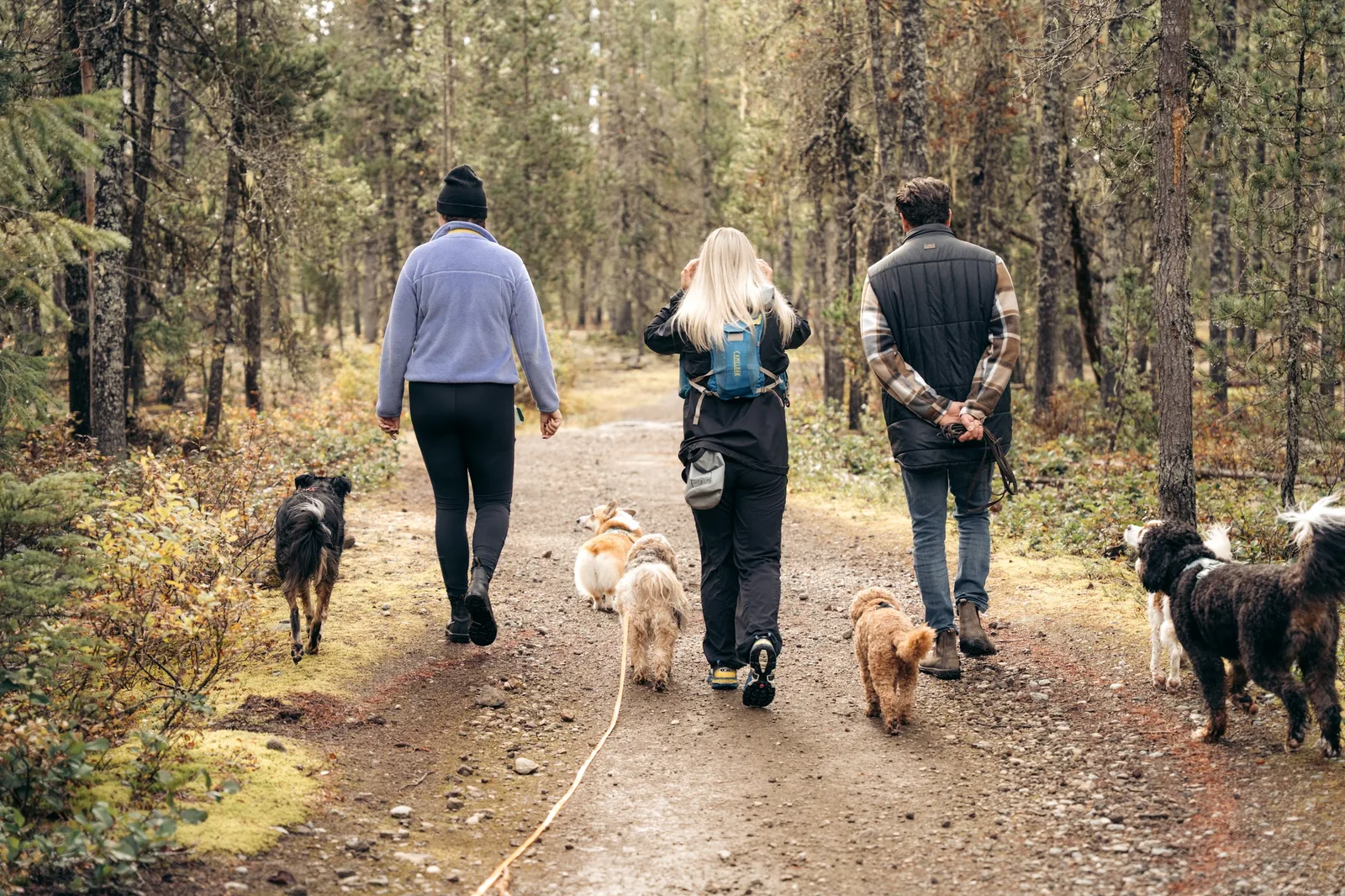
Every pack walker on our team carries the same kit on every walk — Lost Lake, Cheakamus Lake Trail, Rainbow Park, the Sea to Sky corridor:
- Extra leashes and slip leads
- GPS dog trackers on every pack member
- A pouch of high-value treats — for our pack, and for any loose dog we encounter
- A whistle and a small first-aid kit
- WAG, Bylaw, and the nearest vet’s number saved as favourites
We have coached more than one Whistler dog parent through a lost-dog night. It is why we run small packs (six dogs max), why every dog gets a meet-and-greet before joining, and why we will not walk a dog without a properly fitted collar and tag.
The Prevention Layer
The best lost-dog protocol is the one you never have to run:
- Microchip and register. A tag alone is not enough.
- Two points of contact — a flat collar with a tag, plus a harness with a backup tag.
- Train a strong recall before Whistler-specific distractions — elk, marmots, off-leash dogs at Rainbow Park.
- Know your dog’s flight risk profile. Rescues, sighthounds, and any dog in the first 90 days of a new home are highest-risk.
Want an Expert Eye on Your Dog?
If your dog is new to Whistler, new to off-leash, or just new to you — we run meet-and-greets before every first walk. We assess flight risk honestly. We carry the kit. We know the trails and we know who to call.
Start Your Intake